Wednesday, 29 May 2013

Sweet Gale, or Bog Myrtle (Myrica Gale)

Sweet Gale, or Bog Myrtle (Myrica Gale).
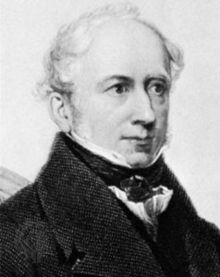
(William James Linton was a radical engraver, artist, poet)

I.
Linton, our artist poet, tells a tale,
How “the sweet South Wind underground was frozen,
And only growth to save her could avail:”
So “she grew up a plant; the plant so chosen
We call in our North Country the Sweet Gale.” 5
It is a pleasant plant, which I have seen
Adorn our moors; in many a rural dale
I too have found it; and it long has been
Prized by the people, who loved to give their ale
A flavour from the herb ere hops were known: 10
Its leaves hung in the houses, did not fail
To yield them their sweet fragrance; most did own
Its powers medicinial; and its wax did form
Fine scented tapers ‘gainst dark Winter’s storm.
II.
And can we learn no lesson from this plant,
To guide us in our passage through the world?
Have we no offering from human want?
No pleasant perfumes from our lives unfurl’d?
If the Sweet Gale can e’en the bog adorn 5
With beauty and with fragrance, cannot we
Bring gifts to ev’ry child of woman born,
And help to gladden poor humanity?
We too can throw abroad some useful light,
Dispelling mental darkness around; 10
Can help to put fell Ignorance to flight;
And aid in binding up each bleeding wound,
Mental or physical, our fellows feel,
And cherish Virtue for our own and other’s weal.

George Markham Tweddell
[Sonnets on Trees and Flowers, pp. 7-8.] Also published in Leeds
Mercury Weekly Supplement, May 3, 1884. Voice of Masonry, May,
1884. Northern Weekly Gazette, April 24, 1897.

William James Linton
(December 7, 1812 – December 29, 1897) was an English-born American wood engraver, landscape painter,political reformer and author of memoirs, novels, poetry and non-fiction. More here http://en.wikipedia.org/wiki/William_James_Linton

Linton was prominent in the Chartist and Republican movements, and was very involved in the development of the utopian ideas based on the nobility of the worker that Morris and Ruskin later espoused. The English Republic, God and the People, a book published in 1851, seems to include his main political ideas. He was involved in the fights against Stamp Tax, and for parliamentary reform, and he edited the Chartist magazine, The Cause of the People. He was deeply immersed in the radical political culture of the times, a proto-Marxist. In America he edited magazines and a newspaper. More here http://www.bbc.co.uk/dna/place-london/plain/A515341

Here are some examples of Tweddell's use of some of WJ Linton's woodcuts - accompanying Poetry of an Old Besom - 


The Daisy (Bellis Perennis)

The Daisy (Bellis Perennis).

The “Day’s Eye” blooms in father Chaucer’s verse,
Through all the centuries; in an inspired hour,
Burns sang the “modest, crimson, tippêd flower”;
Sweetly and brief as old Wither did rehearse
How it does “shut when Titan goes to bed;” 5
Wordsworth with mighty power, has hymn’d its praise;
Montgomery i’ the choicest of his lays,
Tells “how it never dies!” Often it led
Our infant footsteps into rural lanes,
Or along by-paths rich with many a gem 10
Fallen from Flora’s glowing diadem,
Till health and happiness were e’er our gains.
Children are always poets: pity we
Should ever quench the sparks of poësy.

George Markham Tweddell
[Sonnets on Trees and Flowers, p. 18.] Also published in Voice of
Masonry, March, 1885. Northern Weekly Gazette, April 17/97.

Refers to various poets - Chaucer, James Montgomery, Burns, Wordsworth, George Wither

James Montgomery    (4 November 1771 – 30 April 1854) was a British editor, hymnwriter and poet. He
was particularly associated with humanitarian causes such as the campaigns to abolish slavery and to end the exploitation of child chimney sweeps.


George Wither (11 June 1588  – 2 May 1667 .) was an English Emblemist poet, pamphleteer, and satirist. He was a prolific writer who adopted a deliberate plainness of style; he was several times imprisoned. C. V. Wedgwood wrote "every so often in the barren acres of his verse is a stretch enlivened by real wit and observation, or fired with a sudden intensity of feeling".

Monday, 27 May 2013

To Castillo (John Castillo - The Bard of the Dales)

To Castillo  (John Castillo  - The Bard of the Dales)


Although our creeds might vary, Castillo,
And our amusements might not be the same,
(For thou wouldst look with horror on my love
Of the fine dramas with which Sophocles,
Euripides, and Terrence moved the souls 5
Of Greeks and Romans in the days of old;
And those of Marlow, Shakspere, and the rest
Of England’s noblest dramatists, would scorn
To dance around the Maypole with a maid
Fair as the lily and as spotless too; 10
Yet as thou loved my Cleveland’s hills and dales,
And had compassion for her people’s souls,
And strove to gain them from their wicked ways;
Though thou too oft might in confusion blend
Mere innocent enjoyments with their abuse; 15
I love thee, noble if mistaken soul!
And would much rather err with Puritans—
Earnest, thou much too solemn—than defile
My spirit in the brutalizing pools
Of sensual debasements. And I would fain 20
Pay thee such honour as thou merited,
Among our Cleveland poets, though thy rank
Be not the highest: thou hast gained the hearts
Of numbers whom no other bard has won;
And as the vocal songsters of the grove 25
Vary in compass and in melody,
Yet all are welcome to the naturalist,
So in our poesy: not Homer’s strains,
Not Dante’s visits to the nether realms,
Nor Milton soaring to eternal day, 30
Are for all readers. Humble lays like thine
Solace the lab’ring dalesman in his toil,
Help him to bear the numerous ills of life,
And teach his soul to look from earth to heaven.

George Markham Tweddell (writing as..
Peter Proletarius.’

Tweddell Published and edited one of the collections of John Castillo -
[Castillo’s Dialect Poems ed. Geo. M. Tweddell (1878)]

http://en.wikipedia.org/wiki/John_Castillo

Tweddell wrote about John Castillo in his Bards and Authors of Cleveland and South Durham 1872 which you can download from the Tweddell Hub here - http://georgemarkhamtweddell.blogspot.co.uk/2012/12/bards-and-authors-of-cleveland-and.html

And by WH Burnett in Old Cleveland - here http://georgemarkhamtweddell.blogspot.co.uk/2012/12/old-cleveland-local-writers-and-local.html

A classic work on John Castillo is John Castillo Quinlan, Father D [1968] 'John Castillo Bard of the Dales' {Whitby, Horne and Sons Ltd

This balladic poem by Castillo - to the tune of The Rose Tralee shows the depopulation of a village on the North Yorkshire moors as people emigrated via Whitby Harbour to America.


Reflections On Absent Friends, Gone To America
The sun had gone down o'er yon lofty mountain,
The last golden streamer had left the tall tree;
The dwelling below seemed forsaken and gloomy,
Its inmates were tossing upon the wide sea.
The rose tree was nodding the lasses had nourish'd,
Which oft had supplied them with Sunday's perfume;
The wall-flower in sorrowful modesty flourish'd,
And wept o'er the beautiful daisy in bloom!
In the track by the river the green grass is springing,
On whose flowery bank they were oft wont to stray;
No more the still grove with sweet echoes is ringing,
To the voice of the milk maid, or children at play.
The dog in the night time now howls discontented,
Of its master and mistress but lately bereft;
I listen'd and look'd to the place they frequented,
Of them not a sigh, nor a whisper is left.
How strong the emotions of friendship were glowing,
When towed by the steamer the ocean they braved;
Their force was evinced by the tears that were flowing,
As the hat, or the hand, or the handkerchief waved.
From the shores of old England we anxiously view'd them,
A cargo most precious, and dear to our sight;
Far o'er the blue surface affection pursued them,
Till the ship was conceal'd by the curtain of night.
They have left us,—their absence wakes mournful reflection,
As the fast sailing Arundel bears them away;
We can only consign them to heavenly protection,
To Him, whom the winds and the waters obey.
He who roves through the wood may quickly discover,
Their affection in tokens which there he will see;
Where with sorrowful heart each friend or each lover,
May sigh o'er their names in the bark of the tree.

John Castillo

Isaac Binns

Isaac Binns, as far as i know wasn't a poet as such but a writer GM Tweddell had a high respect for...

Isaac Binns
Died August 6th, 1884.

From  http://www.vivientomlinson.com/batley/p16.htm
Dear, genial gifted friend! Thy death to me,
And all who knew thee well, doth sorrow bring
But we in memory will closely cling
To thy bright wit and sound philosophy.
Where shall we another Yorick find? 5
“Flashes of merriment” and humorous lore,
“Were wont to set the table on a roar”
Yet all were innocent, and wise, and kind.
Thou went to learn of Nature, and well knew
She is the best of teachers; tree and flower, 10
Bird, insect, quadruped, each had the power
To interest and please thee; and the True
To winnow from the False was joy to thee,
Who loved all wisdom and true liberty.

George Markham Tweedale [sic] George Markham Tweddell
Rose Cottage, Stokesley.

Notes supplied by Paul Markham Tweddell from GMT
Last week it was our painful duty to record the death of this
gentleman, which took place on Wednesday the 6th August at his
residence in Purlwell Lane, and his mortal remains were consigned to
their last resting place in the Batley Cemetery on Saturday afternoon.
The funeral was attended by a large number of friends of the
deceased, of whom he had very many, from near and afar, also by the
Mayor and Corporation of the borough, the borough officials, the
members of the Britannia Mill Company, and many others, by whom
Mr. Binns was held in high esteem. Before proceeding to the cemetery
the corpse was taken into the new Purlwell Wesleyan Chapel, where a
very impressive funeral service was held, the sacred edifice being
crowded with spectators. The Rev. W. H. W. Evans (Wesleyan) and
the Rev. James Rae (Independent) performed the funeral obsequies.
On the route to the Cemetery and at that place, large numbers of
persons were assembled to witness the mournful procession.
On this occasion it will not be considered out of place if we append a

few particulars respecting our departed townsman and friend Mr.
Binns. He was the son of Abraham and Sarah Binns, who resided at
the bottom of Soothill Lane, where they kept a small grocer’s shop,
the business being still carried on by Mrs. Binns. He was born on the
October 20th, 1844. The father, who was for many years employed as
a woolsorter by Mr. Abraham Brooke, died at the same age as his son
Isaac, and left the same number of children surviving, he being the
eldest and quite a boy at the time. He was educated at the Wesleyan
day school kept by Mr John Osborne, and afterwards remained as a
pupil teacher, under the instruction of the same master. Being
naturally quick and intelligent, he very readily learnt everything he
undertook, and succeeded in passing his examinations particularly
early. But the scholastic profession does not seem to have been
adapted to one of so lively a temperament, and at the expiration of his
time he relinquished that profession and took a responsible situation as
cashier at Messrs. Ward & Co’s., wholesale provision merchants,
Kirkgate, Leeds. Whilst here he married Sarah, eldest daughter of Mr.
John Robinson, of Batley. He then removed to Birstall, where for a
period of about eight years he was the valued manager at the Britannia
Mill. Whilst he was the servant of this company he applied for and
obtained the situation of Borough Accountant for Batley, which office
was rendered vacant by the death of Mr Robert Shackleton. This was
on October 15th 1874, since which time he has fulfilled the arduous
duties with great credit to himself and satisfaction to his employers.
In fact, as a financier, there were few in England that excelled, if
equalled Mr. Binns, and by his death the corporation has lost a most
valuable servant, whose place it will be difficult to fill. By
whomsoever employed, the deceased at all times performed his duties
in such an efficient and exacting manner as to win for him their
admiration, approval, and respect; and he was also highly respected by
everyone with whom he came in contact. In everything to which he
gave his mind he was first and foremost, and amongst other things in
which he took an initiatory part were the formation of Heckmondwike
and the Batley Naturalist Societies, which pursuits were particularly
congenial to him, and as a naturalist he was widely known. As an
antiquarian he was also well known, but next to being a smart
arithmetician, Mr. Binns shone most brilliantly as a literary man.
Whilst a youth, on the formation of the Batley Rifle Corps, he joined
as a volunteer, and the experience he gained as such had doubtless
some influence in bringing forth one of his first literary productions,
“Tom Wallop”, a very comic and racy brochure, which is vividly
remembered even yet. This was followed by “T’Bag o’ Shoddy” and
“T’Coddy Miln” Almanacs and other similar productions, all written
in gushing Yorkshire dialect, and full of wit and humour. He also
edited “Country Words,” “T’Barnsla Foaks” and “Tommy Toddles”
Almanacs, and wrote “Outlines and Notes,” “On the Line,” “The
Argonaut,” “At their Last Victory,” “Fanny the Orphan” “After
Fifteen Years” and other serial stories, which were brimful of original
ideas, and exceedingly racy. But amongst his best efforts as a literary
man is to be named one of his last productions, “From Village to
Town”, which appeared in our columns some time ago, and has since
been published in book form at 1s.6d.
In addition to the foregoing and other works Mr. Binns compiled and
published other tables on the repayment by sinking fund of loans to
corporations.
We must also state that he was a Fellow of the Royal Historical
Society, English Dialect, Folklore and Yorkshire Archaeological and
Topographical and other societies, and in connection with these the
name of Isaac Binns was known beyond even the limits of the county.
It will also be remembered that a short time ago the subject of these
remarks applied for the borough treasurership of the city of Worcester,
and was one of the selected applicants, though he lost the appointment
by one vote.
On Good Friday, as stated by us last week, the deceased was taken ill
with quinsy, followed by rheumatic fever, from which, however, he
sufficiently recovered to attend to his duties, but only for a week,
when he had a relapse and succumbed, as already stated, at the early
age of 39 years. He leaves a widow and five children, in addition to a
large circle of friends and acquaintances to whom he had become
deeply attached by his warm heart and genial disposition.
We may add in conclusion that at Thursday’s meeting of the Batley
Town Council a high tribute was paid by Alderman Fox and the
Mayor to the respect in which the deceased was held, and to the
abilities which he ever displayed.
.....................................


You can read more of Isaac Binn's biography on Vivian Tomlinson's site if you scroll down to the entry on him on this site here http://www.vivientomlinson.com/batley/p16.htm

Vivian Thomlinson writes "

"Isaac Binns must have had a wide circle of friends and correspondents, and among these was George Markham Tweddell , the Cleveland author, whose wife Elizabeth also wrote dialect works under her maiden name of Elizabeth Cole. George and Elizabeth were also strong supporters of a movement to improve conditions among the poor by giving them wider educational opportunities. This they put into practice by moving to Bury, where George became Head of a new Industrial School, and Elizabeth its Matron. On the closure of the school they returned to Cleveland, but with a growing family the 1870s saw a period of financial hardship and Isaac was one of the contributors to a "Purse of Gold" raised by George's friends to assist him.11In November 1881 Isaac Binns received a letter from George with a biography of his wife, Elizabeth, whose work Isaac must have been interested in publishing" View the envelope from Tweddell to Isaac Bins here http://www.vivientomlinson.com/batley/e108.htm

Sunday, 26 May 2013

Chaucer

Chaucer.

“Chaucer! Bright day-star of our English song—
Blest Patriarch of England’s minstrelsy!
Enduring honours unto thee belong;
And all our bards must homage pay to thee,
As father of their strains. In darkest days 5
Of Albion’s ignorance, thou didst sing the lays
That will not die until the ‘crack of doom’
For thou hadst love for Nature and the true,
And well the worth of honest Wycliff knew,
And how priests’ traffick’d for the basest ends 10
Pity it is that, ere thou found the tomb
A shelter from all harms, thy truth should be
The cause of bondage and of poverty
To thee, who number’d Petrarch ‘mongst thy friends.”

George Markham Tweddell as -
Peter Proletarius
[This poem introduced a chapter on John Gower (Gower the Moral) in Tweddell's book The Bards and Authors of Cleveland and South Durham 1872  p. 39 which can be downloaded from the Tweddell Hub here http://georgemarkhamtweddell.blogspot.co.uk/2012/12/bards-and-authors-of-cleveland-and.html

And there's another chapter on Gower (that builds on Tweddell) here in W H Burnett's Old Cleveland - which can also be downloaded here http://georgemarkhamtweddell.blogspot.co.uk/2012/12/old-cleveland-local-writers-and-local.html

Cedmond (Caedmon)

Cedmond.
(This poem introduces Tweddell's chapter on Cadmon in his book The Bards and Authors of Cleveland and South Durham 1872. You can down load the book on the Tweddell Hub here http://georgemarkhamtweddell.blogspot.co.uk/2012/12/bards-and-authors-of-cleveland-and.html
and in Old Cleveland by WH Burnett - here http://georgemarkhamtweddell.blogspot.co.uk/2012/12/old-cleveland-local-writers-and-local.html


“The old Brigantes from our bosky brooks
And heather-covered hills far were driven;
The Roman legions had been call’d away
From Britain’s isle, to cross their swords with men
Who, rear’d in savage wilds, had over-run 5
Fair Italy, and sought to rule the world;
The hardy Saxons, from Teutonic woods,
Had made our shores their own, and fixed their feet
So firmly on the sod, that nought could shake
Their footsteps from our soil; when he arose, 10
Cedmon, the humble herdsman of the swine
That fed on mast of Cleveland’s oaks and beeches,
Or tended beeves that then were wont to graze
In Cleveland’s pastures. He heard old ocean
Dash his wild waves in fury at his feet 15
Of Cleveland’s Iron cliffs, and saw them foam
As if with rage,—anon lie sleeping on
Our silver sands, their motion as serene
As maiden’s breasts, which merely heave with breathing;
He saw the morning sun rise in its beauty, 20
Shine in its glory, and in splendour set;
The moon and stars for him adorn’d the night,
As they had done for Homer; flowers came forth
In all their rustic beauty at his feet;
And birds and bees made music for his ears; 25
And he became—a poet!”

George Markham Tweddell
[Bards and Authors p. 21, under ‘Peter Proletarius’]

Sonnet [to L. W. Crummey]

Cleveland Sonnets,
Third series No. 36 (1890)
[Published with the approval of
Middlesbrough Library,
Listed Tweddell Collection MPLib]

Sonnet [to L. W. Crummey]
In affectionate Remembrance of LAWSON FLECK CRUMMEY,
M.R.C.S., Author of “Extracts from the Diary of a Living
Physician,” and other Works; who was Born at Stokesley, Oct.
23rd 1808; practised his Profession there and at
Middlesbrough for several Years; Died at Great Ayton, June
25th, and was Buried at Stokesley, June 28th, 1886.

Near Fifty Years we had been faithful Friends;
No angry word or look e’er broke the charm
Which brightens life, despite of the alarm
Adversity may raise, although she sends
Her troubles thick upon us. He who blends 5
True Friendship with his acts through life, will find
That all our various human Ills combined
Are powerless to destroy Bliss, which depends
On neither Wealth or Fame. And when Disease
Has seized upon us, then such skill as he 10
Loved to exert for poor humanity,
Has often to the sufferers brought ease.
Both pathos and humour in his life did blend,
As in his writings. Such was my dear friend.
NOTE,—The Manuscript of my departed friend’s unpublished
Vagrancy Sketches having been kindly presented to me by his
Widow and Daughters, it is my intention to give them in the little
Annual which I am attempting to establish for the North of
England.

George Markham Tweddell